Wednesday, May 12, 2010

Monday, March 15, 2010
Friday, February 26, 2010
IMAGINARY TELEVISION
Not too long ago, I was courted by Primary Wave, a publishing company that specializes in finding “placements” for their artists’ songs. They insisted that I would fit in well with their “iconic” catalog, a portfolio that includes the songs of Kurt Cobain, Hall & Oates and John Lennon, among other luminaries.
Help, I’m an icon! I thought.
There are other perhaps less flattering words that they could have used to describe me and that might well be more accurate, but hey, I’m all in favor of a world where folks with money hoist me up to impossible heights, if only to experience the dizzying thrill of dropping like a stone when it is discovered that the rest of the world does not agree with their assessments.
OK, I’ll cunningly go along with their delusions, I figured. Let them waste a few bob on me. My songs have certainly been inert for so long weeds are growing between the stanzas. At least if I knew what a stanza was, and if my songs have any of them, I’d most certainly expect to find a jungle of invasive species crowding them out and blotting out the sunlight.
But the smart folks at Primary Wave have caught on bigtime to the fact that, although CD sales for most of us are, ahem, not very good (!), songs don’t go away. If they did you wouldn’t have to hear the insufferable “Somebody’s Watching Me” on the worst of the otherwise excellent Geico ads every five minutes. Not to mention having to stomach a Journey tune on the final Soprano’s episode, which I refused to watch out of spite. (Did they all get whacked? I’ll never know.)
So anyway, early last summer I received an e-mail from a Primary Wave rep. who deals with the West Coast end of things, TV shows in particular. It was one of those missives that television music supervisors presumably throw out to all their music publishing contacts, requesting a “Main Title,” a theme tune for an upcoming show.
The rep. was unsure as to whether I’d be interested in writing something on spec, and certainly, it’s not an endeavor I’ve ever thought of attempting before, but the idea of the show in question must have got my juices flowing, for within about half an hour I had a ridiculously catchy tune that fit the bill perfectly.
I then booked time at a local studio and recorded a one-and-a half minute opus (that’s all they needed), guitars, vocals, keyboards and synth drums, and was well pleased with the effort.
Not long after submitting the track, I was told that the music supervisor on the show, although expressing high regard for my effort, had ultimately chosen something else.
Not much of a surprise, really, as my observance of TV usages has led me to the conclusion that they mostly either use trendy Indie acts right out of a Nick Harcourt playlist or, like — the Who. As always, Trend and Commerce rule, and their choice in this case was no exception, using as they did a tune by someone you’ve never heard of who nevertheless was in an “Indie” band with a very silly name.
Two weeks later, my contact sent me another request for a Main Title, and with the juices still boiling away, I wrote an even catchier piece (this time they only wanted 40 seconds) and repeated the steps listed above.
To be fair, the first show had at least picked a pretty decent piece of work, trendyness of the artist notwithstanding, but on this second show they chose the lamest instrumental imaginable, probably because they decided to go cheap and hired some hack to cobble something together instead of paying a decent chunk of change to an actual name artist.
So, two rejections, but two potential songs in the bag for me.
And here’s where it gets interesting. What if, I thought, I wrote my own treatments for TV shows — situation comedies for the most part — and then wrote the theme tunes to go with them? The only person who could reject them would be me, and that wasn’t likely to happen because they’d be so bloody good!
I plunged into the concept with some enthusiasm, knowing as I do that anything that gets me off the couch to pick up the guitar and to then return to the couch with said guitar to actually do some work instead of passing out on said couch in front of some highly dubious footwork courtesy of the Fox Soccer Channel would be a good thing.
Within a month or two I had ten songs, which included fleshed out versions of the ones that I’d worked on for the TV shows in the first place.
Then I took the skeletal treatments of the shows and tarted them up into more fully realized plots, recorded “More Questions Than Answers,” the stunning Johnny Nash tune from the early ‘70’s that I’ve had in mind to cover for about 40 years, and there it was, a new album, “Imaginary Television.”
In the booklet that accompanies the CD and Vinyl (yes, vinyl!), you’ll find TV show plots and fake press reviews instead of lyrics (Judd Apatow, call me….), so don’t cheat and ask someone to burn you a copy because by just listening to the songs you won’t have a clue as to what’s going on.
As well as some solo gigs, me and the Figgs will be doing the rounds, so please keep an eye on the Tour page.
Back in the real world, Primary Wave have already been getting results, and the best part is (when it comes to TV show usage at least) that songs are often used in the background, so no ones knows about it. (The fame I don’t need, I’ll just take the dosh, thanks)
Now, there may well be a Paleolithic among you who thinks that even wanting to have tunes placed on TV shows, in movies or in adverts, is a sell out, a morally reprehensible idea, a crass indefensibly offensive affront to the delicate sensibilities of both artiste and audience, a reproachable attack on the bedrock virtues of nonconformist ideology as espoused by 50 years of iconoclastic observance to unwritten codes of conduct evinced by a continual wellspring of rock ‘n’ roll rebellion (stop him…please…) now well established and accepted as a hierarchy implicitly sanctioned in the embedded psyche of a generation of man/child (…oh…) torchbearers still gripping unflinchingly the flame of truth-against-power, a flame (…the humanity…) held dear to countless manifestations of the unadulterated poetics of musical purity, unencumbered (no…no more I beg) by commerciality, resistant to compromise, bound implacably to the concepts of art and simultaneously immune to the vagaries of market and acceptability, popularity (…stop…) and monetary gain, resplendent and intrinsically wedded to higher aspirations of artistic insularity and the (…him…) steadfast multiplicity of complex compositional profundities deeply inherent to the form as established in long-standing antiestablishment diatribes, agitprop and anti-nabob in both structural formulation (…Can’t stand…) (…this…) and density of sonic delivery, immersed in — for want of a better word — cool.
Well, then you’d be a twit.
GP
Tuesday, May 5, 2009
LIVE AT NEWLANDS TAVERN
And other parts of the puzzle
Standing around in a rough circle with this bunch of blokes I hardly
knew and playing my songs to them on that long late summer day,
deep into the afternoon in 1975, was a little intimidating.
The sun slashed though the blue smoke of hash joints and cigarettes;
we drank pints of bitter that the owners of Newlands Tavern, located
in Peckham in the south of London, had kindly allowed us to pull
from the taps, with no charge that I can remember paying.
Things weren't gelling on that first rehearsal, I can tell you that
much. Martin Belmont actually mentioned it to me later, apologizing
for the lackluster nature of the band's attempts to pull off my
material without anything approaching excitement. It didn't matter;
it was our first attempt and compared with any bunch of musicians
I'd done half-hearted rehearsals with before, little imagination
was needed to tell that these guys were going to be very, very good
backing me up.
We worked in a back room when the pub was closed after lunch, and
the creaking, wooden stage of that venerable London venue, just a
few feet away, started to look like something that would soon be
within my reach, an idea hard to imagine mere months before.
It all started with an ad I placed in the back pages of the Melody
Maker, one of the music rags that I devoured every week.
"Singer/songwriter needs band. Into Van Morrison, the Stones and
Dylan," it said, or something very close to that.
In no time, people were responding to the ad, calling the gas station
where I was working in Deepcut, my childhood home that I'd recently
moved back into after a few years on the Hippie trail, dossing
around in different countries with a guitar on my back, honing my
skills at a leisurely pace.
Some dick who billed himself as a bass player called, insisting we
meet at his "office," a pub a few villages away called "The Who'da
Thot It" (keep saying it, it'll come to you); I drove miles and
miles to meet a girl who could only play the licks of Paul Kossoff
(very badly, too), the late great guitarist from the band Free, who
I had seen a year or two before playing to about 30 people in the
Gin Mill Club in Godalming, Surrey, before they broke with "All
Right Now."
The trombone player whose ad seemed a permanent fixture in the
paper ("Trombone Player Needs Work") called, but my horn section
fantasieswere not in the front line of my transom yet; they would
soon emergeby the time I got to the recording studio, but first I
needed a rock 'n' roll band: drums, guitars, and keyboards.
Eventually, a guy named Noel Brown got hold of me. He lived in a
flat near Wandsworth, south London, and played great slide guitar
and dobro. At last I'd found someone who didn't have the taint of
progressive music hanging over him, a genre I'd long left behind
(well, two years ago anyway) and was determined to wipe off the
face of the earth with a whole new attitude; an attitude that at
that time seemed only to exist in my head and on records that were
made before 1970.
Noel introduced me to one Paul "Bassman" Riley, a guy I'd actually
seen on stage playing bass in an outfit called Chilli Willi and the
Red Hot Peppers who were on the "Naughty Rhythms Tour."
I'd been reading about a band called Dr. Feelgood and went to check
out this extravaganza in one of my old stomping grounds, the
Guildford Civic Hall, a few miles from my village. Chilli Willi and the
other band on the bill, the soul inflected Kokomo, were very good, but
of course the Feelgoods were incendiary, and when I saw their suits,
short hair and wickedly angry performance, I knew I was already on
the right track.
You have to realize that progressive rock still ruled, and I was
probably the only guy in the room,* apart from the band members
on stage, who had got rid of his flowing mane for a near skinhead
cut. I may have been ahead of my time for the suburbs cum country
areas, but obviously this reversal of style was already happening in
London, hence the ad in the Melody Maker. I needed other people
who also knew that ELP were a load of bollocks, and I found them.
They were not Paul and Noel, though, who did rehearse a few times
with me, along with various configurations of their musician friends,
but when Paul introduced me to Dave Robinson, things changed
rapidly. He recorded my songs in his demo studio, located in a room
in the Hope & Anchor, an Islington pub with a cellar-like venue in the
bowels of the building.
Anyone who would play for a free pint was brought in by Dave to
have a go on the demos, but he was stealthily formulating ideas
about who my eventual backing band would consist of, and before I
knew what was happening, a bunch of guys destined to become the
Rumour were rehearsing with me in the aforementioned Newlands
Tavern.
On the third day of rehearsal, Dave brought down a lanky bird-nosed
fellow named Nick Lowe, who I would learn was another victim of a
mysterious genre known as "pub rock."
(He was not the first contender for producer. Dave and I had had
lunch not long before those rehearsals with Tim Moore, an American
singer/songwriter who had recently scored a minor UK hit with a
song called "Second Avenue." Dave, in his inscrutable fashion had
apparently nixed that idea without much clarification in favour of
Lowe.)
It was here, in Newlands Tavern, that we took the democratic tack
of coming up with names for the band and then voting for the winner.
I came up with Graham Parker and the Questions, but Brinsley's The
Rumour obviously won.
The rest, as they say, is history, and if you want to read the most
definitive history of the events and situations that led to my break
into the music business, along with many others who gained from the
smarts of Dave Robinson, among others, read Will Burch's "No Sleep
Till Canvey Island: the great pub rock revolution"
It was some months into the beginning of my career when someone,
a Rumour member or Robinson himself, gave me an actual Brinsley
Schwarz album. The inappropriate term pub rock had been appearing
in articles about me, and I was further confused when I listened to
the Brinsley's album: "What the fuck has this lame country music
got to do with me?" I wondered.
Whatever, it matters not when I point out to journalists the
exasperating irrelevance of this term, which I did just 4 days ago.
It will doubtless be used in my obituary.
(*I guess I was not the only male member of the audience with short
hair at the Guildford Civic Hall that night. According to Burch's
book, a certain 17-year-old named Paul Weller was there, although,
who knows? Maybe he had hair down to his arse until after seeing
the show!
The date of this auspicious event was January 12th 1975. Before
half the year was out I'd have a manager, a crack backing band, and
a record deal. When I saw this gig I was just some bloke working
in a gas station with no future that anyone, apart from myself,
would have guessed at.)
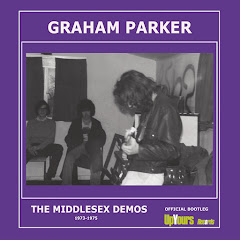
Which brings us to this Official Bootleg, "Live At Newlands Tavern."
On the My Gig List section of Johannes Deininger's excellent "Struck
By Lightning" website, the first two gigs I did with the Rumour
appear thus:
10 or 11/75: Newlands Tavern, London, UK
75: Nag's Head, High Wycombe, UK
The time period seems accurate to me, but starting in a fairly
famous London venue runs counterintuitive to normal tactics in
exposing a new band and also does not jibe with my admittedly
dodgy memory. I'd say that we almost definitely performed in
High Wycombe first and followed up with the London show.
(I'll admit here that I could be wrong about the order!).
I can recall hanging around a soccer field or park in the afternoon
shivering in the cold drizzle, smoking a joint and riddled with
nerves about the upcoming evening. Why we were hanging around a
field I don't know, but that vague memory is in my head and we were
in High Wycombe, not London.
The audience that night was comprised mostly of pals of mine from
various villages in Surrey who would have found the proximity of
High Wycombe more appealing than a trek up to south London.
As for the show featured on this disc: who was that masked man?
Whoever held the tape recorder appears to have been hanging out
near the bar, which was located on the right as you looked at the
stage. At the risk of sounding sexist I say "man" because surely
finding a woman with a tape recorder at a gig in 1975 would be like
finding a female Captain Beefheart fan in any era.
And what are we hearing on this tape?
Martin Belmont is doing the announcing (I don't say a word). And
this may well be the complete show as far as my performance is
concerned, but I'm sure the Rumour did their own set beforehand.
I also remember something that does not appear here: Martin
introduced me thus: "And now we'd like to bring on a friend of ours.
Please welcome, Graham Parker." Yes, to blunt the shock of this
unknown character taking the stage in a well-known London venue
and completely taking over center stage, I was introduced almost as
a sideman! Talk about hedging your bets! In retrospect, this was
probably a smart move seeing as Martin was from the classic Pub
Rock band Ducks Deluxe and Bob and Brinsley were from the Brinsley
Schwarz band, in many ways considered to be the epitome of this
alleged genre. Also, the next time we played London, after our profile
had been upped considerably and articles about us had been appearing
in the music press, Dave told me that some members of my growing
audience had been at that first London gig in Newlands, and that they
had hated my guts. It wasn't that they didn't like the music, and the
applause on this recording seems quite rousing. It was the idea
of this guy they'd never heard of, appearing from nowhere, and
fronting a class A outfit consisting of London's finest as if they
were a mere backing band that pissed them off.
What strikes me most about this tape is the full-grown ferocity of
the performance. Not only do I sound as if I was already competing
with the punk bands that were not to fully emerge until over a year
later, but the Rumour sound as if they've been playing my stuff for
years, and are rocking in suitably ferocious form themselves.
After those brief rehearsals and only one gig, it amazes me just
how good we were already, and how far ahead of anything else going
on at the time (Dr. Feelgood notwithstanding).
Gone is the almost apologetic "let's just play the songs, man"
attitude of the pub rock scene that the band had come from, and my
new found angst (I was lying around watching the ceiling changing
shapes to a backdrop of "Dark Side Of The Moon" only a couple of
years earlier) seems to have been picked up by everyone and applied
with full force, making it seem as if we had planned this like a
military operation.
It's hard to imagine where I got the balls to even consider doing
"Chain Of Fools," and doing it as if I wanted to strangle the
offending member of the opposite sex that the song details.
And the arrangements of my own songs seem very close to those on
"Howlin' Wind," right down to some of Brinsley's sax lines (yes,
that's Brinsley on the sax!) that would appear on the album fleshed
out by a full horn section.
Even "Don't Ask Me Questions" has the brutal urgency of an anthem,
just as it does on the record. How did we get this act together
so quickly? Beats me.
Then there's the strange break in the show followed by a brief
appearance of the Rumour without me, doing an instrumental they had
been working on in rehearsals called "Rockin' Hawk" (don't know who
did this originally) and then I'm back on doing two more songs that
would appear on the first record and a song we probably never did
again called "Express Delivery," which appears to use drug smuggling
as a metaphor for lost love!
What also strikes me is the fantastic lead guitar work by Martin
Belmont. It is assumed that Brinsley was the real virtuoso of the
twin guitar attack and that Martin was more the rhythm player, but
most of the solos are handled by Martin, and what an underrated
lead player he is.
An interesting detail comes before "Questions," which Martin also
plays lead on. It's hard to hear what he's saying before we start
the song, but I believe Martin is commenting (and filling a rare
silent gap) on Brinsley's reggae guitar technique. Brins would
take a piece of foam and place it beneath his guitar strings near
the bridge to achieve a deadened, ring-free sound. Where he'd got
this idea from I don't know, but it was the early days of white
boys playing reggae (apart from GT Moore and the Reggae Guitars who
had made a great album in that groove that very year) and perhaps
the form was still a little mysterious.
Although the sound of this recording is obviously of very low
quality, the intensity of our act comes through nonetheless, and
the noise of the audience ("white wine, white wine..." a woman appears
to be repeating sluggishly at the bar) imbues the experience with
that full-on London pub atmosphere, bringing a bygone era back into
sharp focus.
Hey, it's gotta be worth ten bucks, that's for sure.
Available from this site and at gigs.
Enjoy.
http://grahamparker.net/newlands.php
Monday, February 9, 2009
CARP FISHING ON VALIUM: THE LINER NOTES
Just before the release of "Carp Fishing On Valium," I was playing a gig in New York's Bottom Line. I mentioned my upcoming literary effort to my friend Alan Pepper, the owner of the venerable joint. "Write some songs to go with the stories and take it on the road," he suggested. I scoffed loudly at the impertinence of his idea and dismissed it out of hand, thinking that writing the book had been enough effort already and that St. Martin's Press would swing into high gear at its release and I could lay back and choke myself stupid on the copious amounts of champagne the royalties would bring in and not have to lift a finger again for a few years.
However, once I got home I dug into the task with gusto and in fairly short order had a bunch of songs going, only cheating once with the previously released "Soultime," because nothing could beat it as an accompaniment for the moddy boy opus, "Aub."
Now came the hard part. Getting the gigs would be easy enough, but getting a book publishing company to do anything other than hand me over to a clueless intern proved impossible, and so after tearing the hapless intern a new one when she informed me in an e-mail that picking up the phone and calling a few bookstores to invite them down to the venues to sell a few books was "all so complicated," I forgot about the company and just got on with it myself, treating it like any other tour where I do all the work anyway.
One thing I've learned about book publishing companies: after the product is released the phone stops ringing.
Approximately sixteen gigs were completed, starting in July 2000, many with Tom Freund as musical accompaniment, playing upright bass, guitar, and mandolin. Which brings us to this latest release in our "official bootleg" series.
Many artists dream of releasing the rawest recordings they have, and preferably before they die when someone with less sensitivity will do the job for them and release the rawest crap that they have, material that the artist would rather remain safely rotting in a dank basement.
These songs, however, fit the bill perfectly, having been recorded in the bathroom on my trusty 1980's Sony Pro Cassette recorder (with separate microphone requiring a triple A battery no less), and soon after dispatched to Tom Freund.
I'd forgotten all about this until our webmaster John Howells -- who I must have sent a copy to for his amusement -- worked the sound a bit, dumped it on a CD, and sent it off to me for my amusement.
Damn, it sounds fine!
It has all the prerequisites of the raw demo scenario with strong vocal and guitar work, plenty of open tuning, songs that sparked off entire albums like "Blue Horizon" and "Anything For A Laugh," a tune called "Hot Ringlets" which I never even sang on the tour but ripped off later for "Go Little Jimmy," and of course six tunes never heard again until now.
Please enjoy the real thing.
http://grahamparker.net/carpfishing.php
Friday, February 6, 2009
AN IMPORTANT MESSAGE FOR PRESIDENT OBAMA
Tell the Republicans to go fuck themselves. No, really. Tell-the
Republicans-to-go-fuck-themselves.
America (and the rest of the world) has suffered eight years of
these assholes — the “we create our own reality” (Rove) crowd — who
were convinced after they defiled the horror of 9/11 with a phony war
and all the torturous trinkets they draped it with that they would
ultimately prevail in their quest to maintain Republican power for
many years to come. Mr. Obama, don’t look a gift horse in the mouth
after it has kicked itself in the balls. Give it another kick, just
to make sure it isn’t getting up again any time soon.
These are the people who’s ultimate goal is to eradicate all social
programs, to privatize everything, and to keep America in the wild
west where Reagan placed it years ago with a policy of deregulation
which has finally imploded, leading to the current economic crash.
These are the people who would stand up in a debate, as the
Republican candidates did in late 2008, and when asked if they
“believed” in evolution (as if evolution is something to “believe”
in, like a deity) would most certainly keep their hands firmly to
their sides. This is the type of nutter you are dealing with here.
Conservative thinking is over. Its crushing,
one-small-portion-of-the-left-hemisphere-of-my-brain-is-all-I’m-using
approach to the complexities of this period in history are now too
flat-footed to be entertained by anyone who is using a modicum of
the other cranial areas. It might have been useful once, but it’s
not anymore.
Look, Pres., the public chose you over a man who was so obviously
suffering the beginnings of some degenerative brain disease, the
like of which strikes our aged with such unfortunate regularity.
(Well done, old chap! You beat a man with Alzheimers!) Don’t let
these “ideology above everything” folks grind you down. Please
find your Huevos Grandes, and quickly.
And so, President Obama, tell the republicans to go fuck themselves.
Thanks you for your time today, sir.
The Chairman
Wednesday, October 17, 2007
"THE END OF FAITH"
(Available for download only, now on emusic with itunes and others soon to follow.)
At some point during the period in which I wrote the "Don't Tell Columbus" songs, I was also writing a tune called "The End Of Faith," a number born of my disdain for religion, and therefore much too literal for the more balanced, nuanced content of the forthcoming collection.
Seeing this discrepancy coming from a mile away, I ceased working on the song and left it half finished, envisioning perhaps its eventual lack of completion altogether, or, in more rash moments, writing an entire album of anti-religious tirades and using "The End Of Faith" as the cornerstone for such an endeavor.
But I find it a very hard and tiresome thought to narrow my work down to such a dogged and literal pursuit, and the thought of the difficulties involved with composing a dozen rants that bashed the heads of the faithful felt like a lead weight, and so instead, I merely finished writing this one song fairly recently, just for the heck of it.
Apart from a long held but inchoate idea (I can't bring myself to use the word "belief" and therefore use the word "idea" instead) that religion is a malignant force, and that belief and faith are the two most dangerous concepts in the world and have proven themselves to be over and over again, I have not seen anything that brings this feeling into tangible content in my entire life until recently.
Enter the three extraordinary books that give focus to the wishy washy liberalism of my highly untrained and uncoordinated mind: "The End Of Faith" by Sam Harris, "The God Delusion" by Richard Dawkins, and "God Is Not Great: how religion poisons everything " by Christopher Hitchens (gotta love that subtitle!).
Reading these books, especially the ones by Harris and Hitchens, is a mind expanding experience. The Hawkins book is good, but comes over as more of an appreciation of the elegance and reality of evolution and the delusionality of denying this phenomenon than the double whammy intellectual tour de force(s) of the other two.
If you have any interest in the subject, don't miss these publications. All three books were best sellers, and if you want to start somewhere, start with Harris's "The End Of Faith" itself, from whence my song title comes, which will cost you less anyway because it's out in paperback. If that book doesn't blow your mind with its clear-headed and often startling revelations (if you'll excuse the word), especially when confronting the utter lameness of the acceptance and tolerance by Liberals of other peoples' "faiths," despite the absurd and sometimes vile nature that is inherent in those "faiths," then I don't suppose the concept will interest you much anyway.
I could blabber on about my take on the subject, but due to my lack of formal education (I don't consider an English secondary modern school a formal education), my ignorance of the timeline of religion in any coherent historic sense, and my lack of the kind of elucidation brought forth by these writers, it's probably better for anyone interested to read these books for themselves.
Suffice to say, I think this is an urgent matter, and I think the sooner mankind can stamp out religion with the light of reason the better. The world and the universe will not be any less miraculous for it, more so in fact, and the misery these superstitions and "faiths" inflict in what can only be described rationally as belief in the supernatural, can be marginalized and banished to the crackpot realm where they now fully belong.
Hitchens describes in great clarity what you already know: that the whole shebang is entirely man-made, and his brilliant assessment "what can be asserted without evidence can also be dismissed without evidence" is the perfect antidote to the idea that openly doubting the beliefs of the faithful is off limits to people of reason.
As Hitchens also said on his often hilarious debate with Al Sharpton on a recent edition of "Hardball Plaza" with Chris Matthews, "It's time to get up off your knees. Stop groveling." Well said.
GP
PS: (Preemptive strike against the folks out there who follow the pundits.)
Yes, yes, I know: Hitchens thought that invading Iraq was a spiffing idea and still thinks so, despite the obvious catastrophe of it all. On this I disagree.)
MUSICIANS
MIKE GENT: DRUMS, BACKING VOCALS, LEAD GUITAR SOLO
ED VALAUSKAS: BASS GUITAR
SCOTT JANOVITZ: KEYBOARDS
GP: VOCALS, ACOUSTIC GUITAR, ELECTRIC GUITAR
Subscribe to:
Posts (Atom)