And other parts of the puzzle
Standing around in a rough circle with this bunch of blokes I hardly
knew and playing my songs to them on that long late summer day,
deep into the afternoon in 1975, was a little intimidating.
The sun slashed though the blue smoke of hash joints and cigarettes;
we drank pints of bitter that the owners of Newlands Tavern, located
in Peckham in the south of London, had kindly allowed us to pull
from the taps, with no charge that I can remember paying.
Things weren't gelling on that first rehearsal, I can tell you that
much. Martin Belmont actually mentioned it to me later, apologizing
for the lackluster nature of the band's attempts to pull off my
material without anything approaching excitement. It didn't matter;
it was our first attempt and compared with any bunch of musicians
I'd done half-hearted rehearsals with before, little imagination
was needed to tell that these guys were going to be very, very good
backing me up.
We worked in a back room when the pub was closed after lunch, and
the creaking, wooden stage of that venerable London venue, just a
few feet away, started to look like something that would soon be
within my reach, an idea hard to imagine mere months before.
It all started with an ad I placed in the back pages of the Melody
Maker, one of the music rags that I devoured every week.
"Singer/songwriter needs band. Into Van Morrison, the Stones and
Dylan," it said, or something very close to that.
In no time, people were responding to the ad, calling the gas station
where I was working in Deepcut, my childhood home that I'd recently
moved back into after a few years on the Hippie trail, dossing
around in different countries with a guitar on my back, honing my
skills at a leisurely pace.
Some dick who billed himself as a bass player called, insisting we
meet at his "office," a pub a few villages away called "The Who'da
Thot It" (keep saying it, it'll come to you); I drove miles and
miles to meet a girl who could only play the licks of Paul Kossoff
(very badly, too), the late great guitarist from the band Free, who
I had seen a year or two before playing to about 30 people in the
Gin Mill Club in Godalming, Surrey, before they broke with "All
Right Now."
The trombone player whose ad seemed a permanent fixture in the
paper ("Trombone Player Needs Work") called, but my horn section
fantasieswere not in the front line of my transom yet; they would
soon emergeby the time I got to the recording studio, but first I
needed a rock 'n' roll band: drums, guitars, and keyboards.
Eventually, a guy named Noel Brown got hold of me. He lived in a
flat near Wandsworth, south London, and played great slide guitar
and dobro. At last I'd found someone who didn't have the taint of
progressive music hanging over him, a genre I'd long left behind
(well, two years ago anyway) and was determined to wipe off the
face of the earth with a whole new attitude; an attitude that at
that time seemed only to exist in my head and on records that were
made before 1970.
Noel introduced me to one Paul "Bassman" Riley, a guy I'd actually
seen on stage playing bass in an outfit called Chilli Willi and the
Red Hot Peppers who were on the "Naughty Rhythms Tour."
I'd been reading about a band called Dr. Feelgood and went to check
out this extravaganza in one of my old stomping grounds, the
Guildford Civic Hall, a few miles from my village. Chilli Willi and the
other band on the bill, the soul inflected Kokomo, were very good, but
of course the Feelgoods were incendiary, and when I saw their suits,
short hair and wickedly angry performance, I knew I was already on
the right track.
You have to realize that progressive rock still ruled, and I was
probably the only guy in the room,* apart from the band members
on stage, who had got rid of his flowing mane for a near skinhead
cut. I may have been ahead of my time for the suburbs cum country
areas, but obviously this reversal of style was already happening in
London, hence the ad in the Melody Maker. I needed other people
who also knew that ELP were a load of bollocks, and I found them.
They were not Paul and Noel, though, who did rehearse a few times
with me, along with various configurations of their musician friends,
but when Paul introduced me to Dave Robinson, things changed
rapidly. He recorded my songs in his demo studio, located in a room
in the Hope & Anchor, an Islington pub with a cellar-like venue in the
bowels of the building.
Anyone who would play for a free pint was brought in by Dave to
have a go on the demos, but he was stealthily formulating ideas
about who my eventual backing band would consist of, and before I
knew what was happening, a bunch of guys destined to become the
Rumour were rehearsing with me in the aforementioned Newlands
Tavern.
On the third day of rehearsal, Dave brought down a lanky bird-nosed
fellow named Nick Lowe, who I would learn was another victim of a
mysterious genre known as "pub rock."
(He was not the first contender for producer. Dave and I had had
lunch not long before those rehearsals with Tim Moore, an American
singer/songwriter who had recently scored a minor UK hit with a
song called "Second Avenue." Dave, in his inscrutable fashion had
apparently nixed that idea without much clarification in favour of
Lowe.)
It was here, in Newlands Tavern, that we took the democratic tack
of coming up with names for the band and then voting for the winner.
I came up with Graham Parker and the Questions, but Brinsley's The
Rumour obviously won.
The rest, as they say, is history, and if you want to read the most
definitive history of the events and situations that led to my break
into the music business, along with many others who gained from the
smarts of Dave Robinson, among others, read Will Burch's "No Sleep
Till Canvey Island: the great pub rock revolution"
It was some months into the beginning of my career when someone,
a Rumour member or Robinson himself, gave me an actual Brinsley
Schwarz album. The inappropriate term pub rock had been appearing
in articles about me, and I was further confused when I listened to
the Brinsley's album: "What the fuck has this lame country music
got to do with me?" I wondered.
Whatever, it matters not when I point out to journalists the
exasperating irrelevance of this term, which I did just 4 days ago.
It will doubtless be used in my obituary.
(*I guess I was not the only male member of the audience with short
hair at the Guildford Civic Hall that night. According to Burch's
book, a certain 17-year-old named Paul Weller was there, although,
who knows? Maybe he had hair down to his arse until after seeing
the show!
The date of this auspicious event was January 12th 1975. Before
half the year was out I'd have a manager, a crack backing band, and
a record deal. When I saw this gig I was just some bloke working
in a gas station with no future that anyone, apart from myself,
would have guessed at.)
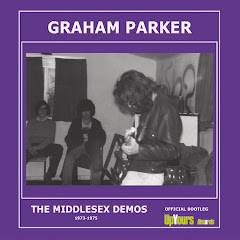
Which brings us to this Official Bootleg, "Live At Newlands Tavern."
On the My Gig List section of Johannes Deininger's excellent "Struck
By Lightning" website, the first two gigs I did with the Rumour
appear thus:
10 or 11/75: Newlands Tavern, London, UK
75: Nag's Head, High Wycombe, UK
The time period seems accurate to me, but starting in a fairly
famous London venue runs counterintuitive to normal tactics in
exposing a new band and also does not jibe with my admittedly
dodgy memory. I'd say that we almost definitely performed in
High Wycombe first and followed up with the London show.
(I'll admit here that I could be wrong about the order!).
I can recall hanging around a soccer field or park in the afternoon
shivering in the cold drizzle, smoking a joint and riddled with
nerves about the upcoming evening. Why we were hanging around a
field I don't know, but that vague memory is in my head and we were
in High Wycombe, not London.
The audience that night was comprised mostly of pals of mine from
various villages in Surrey who would have found the proximity of
High Wycombe more appealing than a trek up to south London.
As for the show featured on this disc: who was that masked man?
Whoever held the tape recorder appears to have been hanging out
near the bar, which was located on the right as you looked at the
stage. At the risk of sounding sexist I say "man" because surely
finding a woman with a tape recorder at a gig in 1975 would be like
finding a female Captain Beefheart fan in any era.
And what are we hearing on this tape?
Martin Belmont is doing the announcing (I don't say a word). And
this may well be the complete show as far as my performance is
concerned, but I'm sure the Rumour did their own set beforehand.
I also remember something that does not appear here: Martin
introduced me thus: "And now we'd like to bring on a friend of ours.
Please welcome, Graham Parker." Yes, to blunt the shock of this
unknown character taking the stage in a well-known London venue
and completely taking over center stage, I was introduced almost as
a sideman! Talk about hedging your bets! In retrospect, this was
probably a smart move seeing as Martin was from the classic Pub
Rock band Ducks Deluxe and Bob and Brinsley were from the Brinsley
Schwarz band, in many ways considered to be the epitome of this
alleged genre. Also, the next time we played London, after our profile
had been upped considerably and articles about us had been appearing
in the music press, Dave told me that some members of my growing
audience had been at that first London gig in Newlands, and that they
had hated my guts. It wasn't that they didn't like the music, and the
applause on this recording seems quite rousing. It was the idea
of this guy they'd never heard of, appearing from nowhere, and
fronting a class A outfit consisting of London's finest as if they
were a mere backing band that pissed them off.
What strikes me most about this tape is the full-grown ferocity of
the performance. Not only do I sound as if I was already competing
with the punk bands that were not to fully emerge until over a year
later, but the Rumour sound as if they've been playing my stuff for
years, and are rocking in suitably ferocious form themselves.
After those brief rehearsals and only one gig, it amazes me just
how good we were already, and how far ahead of anything else going
on at the time (Dr. Feelgood notwithstanding).
Gone is the almost apologetic "let's just play the songs, man"
attitude of the pub rock scene that the band had come from, and my
new found angst (I was lying around watching the ceiling changing
shapes to a backdrop of "Dark Side Of The Moon" only a couple of
years earlier) seems to have been picked up by everyone and applied
with full force, making it seem as if we had planned this like a
military operation.
It's hard to imagine where I got the balls to even consider doing
"Chain Of Fools," and doing it as if I wanted to strangle the
offending member of the opposite sex that the song details.
And the arrangements of my own songs seem very close to those on
"Howlin' Wind," right down to some of Brinsley's sax lines (yes,
that's Brinsley on the sax!) that would appear on the album fleshed
out by a full horn section.
Even "Don't Ask Me Questions" has the brutal urgency of an anthem,
just as it does on the record. How did we get this act together
so quickly? Beats me.
Then there's the strange break in the show followed by a brief
appearance of the Rumour without me, doing an instrumental they had
been working on in rehearsals called "Rockin' Hawk" (don't know who
did this originally) and then I'm back on doing two more songs that
would appear on the first record and a song we probably never did
again called "Express Delivery," which appears to use drug smuggling
as a metaphor for lost love!
What also strikes me is the fantastic lead guitar work by Martin
Belmont. It is assumed that Brinsley was the real virtuoso of the
twin guitar attack and that Martin was more the rhythm player, but
most of the solos are handled by Martin, and what an underrated
lead player he is.
An interesting detail comes before "Questions," which Martin also
plays lead on. It's hard to hear what he's saying before we start
the song, but I believe Martin is commenting (and filling a rare
silent gap) on Brinsley's reggae guitar technique. Brins would
take a piece of foam and place it beneath his guitar strings near
the bridge to achieve a deadened, ring-free sound. Where he'd got
this idea from I don't know, but it was the early days of white
boys playing reggae (apart from GT Moore and the Reggae Guitars who
had made a great album in that groove that very year) and perhaps
the form was still a little mysterious.
Although the sound of this recording is obviously of very low
quality, the intensity of our act comes through nonetheless, and
the noise of the audience ("white wine, white wine..." a woman appears
to be repeating sluggishly at the bar) imbues the experience with
that full-on London pub atmosphere, bringing a bygone era back into
sharp focus.
Hey, it's gotta be worth ten bucks, that's for sure.
Available from this site and at gigs.
Enjoy.
http://grahamparker.net/newlands.php
Tuesday, May 5, 2009

Monday, February 9, 2009
CARP FISHING ON VALIUM: THE LINER NOTES
Just before the release of "Carp Fishing On Valium," I was playing a gig in New York's Bottom Line. I mentioned my upcoming literary effort to my friend Alan Pepper, the owner of the venerable joint. "Write some songs to go with the stories and take it on the road," he suggested. I scoffed loudly at the impertinence of his idea and dismissed it out of hand, thinking that writing the book had been enough effort already and that St. Martin's Press would swing into high gear at its release and I could lay back and choke myself stupid on the copious amounts of champagne the royalties would bring in and not have to lift a finger again for a few years.
However, once I got home I dug into the task with gusto and in fairly short order had a bunch of songs going, only cheating once with the previously released "Soultime," because nothing could beat it as an accompaniment for the moddy boy opus, "Aub."
Now came the hard part. Getting the gigs would be easy enough, but getting a book publishing company to do anything other than hand me over to a clueless intern proved impossible, and so after tearing the hapless intern a new one when she informed me in an e-mail that picking up the phone and calling a few bookstores to invite them down to the venues to sell a few books was "all so complicated," I forgot about the company and just got on with it myself, treating it like any other tour where I do all the work anyway.
One thing I've learned about book publishing companies: after the product is released the phone stops ringing.
Approximately sixteen gigs were completed, starting in July 2000, many with Tom Freund as musical accompaniment, playing upright bass, guitar, and mandolin. Which brings us to this latest release in our "official bootleg" series.
Many artists dream of releasing the rawest recordings they have, and preferably before they die when someone with less sensitivity will do the job for them and release the rawest crap that they have, material that the artist would rather remain safely rotting in a dank basement.
These songs, however, fit the bill perfectly, having been recorded in the bathroom on my trusty 1980's Sony Pro Cassette recorder (with separate microphone requiring a triple A battery no less), and soon after dispatched to Tom Freund.
I'd forgotten all about this until our webmaster John Howells -- who I must have sent a copy to for his amusement -- worked the sound a bit, dumped it on a CD, and sent it off to me for my amusement.
Damn, it sounds fine!
It has all the prerequisites of the raw demo scenario with strong vocal and guitar work, plenty of open tuning, songs that sparked off entire albums like "Blue Horizon" and "Anything For A Laugh," a tune called "Hot Ringlets" which I never even sang on the tour but ripped off later for "Go Little Jimmy," and of course six tunes never heard again until now.
Please enjoy the real thing.
http://grahamparker.net/carpfishing.php
However, once I got home I dug into the task with gusto and in fairly short order had a bunch of songs going, only cheating once with the previously released "Soultime," because nothing could beat it as an accompaniment for the moddy boy opus, "Aub."
Now came the hard part. Getting the gigs would be easy enough, but getting a book publishing company to do anything other than hand me over to a clueless intern proved impossible, and so after tearing the hapless intern a new one when she informed me in an e-mail that picking up the phone and calling a few bookstores to invite them down to the venues to sell a few books was "all so complicated," I forgot about the company and just got on with it myself, treating it like any other tour where I do all the work anyway.
One thing I've learned about book publishing companies: after the product is released the phone stops ringing.
Approximately sixteen gigs were completed, starting in July 2000, many with Tom Freund as musical accompaniment, playing upright bass, guitar, and mandolin. Which brings us to this latest release in our "official bootleg" series.
Many artists dream of releasing the rawest recordings they have, and preferably before they die when someone with less sensitivity will do the job for them and release the rawest crap that they have, material that the artist would rather remain safely rotting in a dank basement.
These songs, however, fit the bill perfectly, having been recorded in the bathroom on my trusty 1980's Sony Pro Cassette recorder (with separate microphone requiring a triple A battery no less), and soon after dispatched to Tom Freund.
I'd forgotten all about this until our webmaster John Howells -- who I must have sent a copy to for his amusement -- worked the sound a bit, dumped it on a CD, and sent it off to me for my amusement.
Damn, it sounds fine!
It has all the prerequisites of the raw demo scenario with strong vocal and guitar work, plenty of open tuning, songs that sparked off entire albums like "Blue Horizon" and "Anything For A Laugh," a tune called "Hot Ringlets" which I never even sang on the tour but ripped off later for "Go Little Jimmy," and of course six tunes never heard again until now.
Please enjoy the real thing.
http://grahamparker.net/carpfishing.php
Friday, February 6, 2009
AN IMPORTANT MESSAGE FOR PRESIDENT OBAMA
Tell the Republicans to go fuck themselves. No, really. Tell-the
Republicans-to-go-fuck-themselves.
America (and the rest of the world) has suffered eight years of
these assholes — the “we create our own reality” (Rove) crowd — who
were convinced after they defiled the horror of 9/11 with a phony war
and all the torturous trinkets they draped it with that they would
ultimately prevail in their quest to maintain Republican power for
many years to come. Mr. Obama, don’t look a gift horse in the mouth
after it has kicked itself in the balls. Give it another kick, just
to make sure it isn’t getting up again any time soon.
These are the people who’s ultimate goal is to eradicate all social
programs, to privatize everything, and to keep America in the wild
west where Reagan placed it years ago with a policy of deregulation
which has finally imploded, leading to the current economic crash.
These are the people who would stand up in a debate, as the
Republican candidates did in late 2008, and when asked if they
“believed” in evolution (as if evolution is something to “believe”
in, like a deity) would most certainly keep their hands firmly to
their sides. This is the type of nutter you are dealing with here.
Conservative thinking is over. Its crushing,
one-small-portion-of-the-left-hemisphere-of-my-brain-is-all-I’m-using
approach to the complexities of this period in history are now too
flat-footed to be entertained by anyone who is using a modicum of
the other cranial areas. It might have been useful once, but it’s
not anymore.
Look, Pres., the public chose you over a man who was so obviously
suffering the beginnings of some degenerative brain disease, the
like of which strikes our aged with such unfortunate regularity.
(Well done, old chap! You beat a man with Alzheimers!) Don’t let
these “ideology above everything” folks grind you down. Please
find your Huevos Grandes, and quickly.
And so, President Obama, tell the republicans to go fuck themselves.
Thanks you for your time today, sir.
The Chairman
Republicans-to-go-fuck-themselves.
America (and the rest of the world) has suffered eight years of
these assholes — the “we create our own reality” (Rove) crowd — who
were convinced after they defiled the horror of 9/11 with a phony war
and all the torturous trinkets they draped it with that they would
ultimately prevail in their quest to maintain Republican power for
many years to come. Mr. Obama, don’t look a gift horse in the mouth
after it has kicked itself in the balls. Give it another kick, just
to make sure it isn’t getting up again any time soon.
These are the people who’s ultimate goal is to eradicate all social
programs, to privatize everything, and to keep America in the wild
west where Reagan placed it years ago with a policy of deregulation
which has finally imploded, leading to the current economic crash.
These are the people who would stand up in a debate, as the
Republican candidates did in late 2008, and when asked if they
“believed” in evolution (as if evolution is something to “believe”
in, like a deity) would most certainly keep their hands firmly to
their sides. This is the type of nutter you are dealing with here.
Conservative thinking is over. Its crushing,
one-small-portion-of-the-left-hemisphere-of-my-brain-is-all-I’m-using
approach to the complexities of this period in history are now too
flat-footed to be entertained by anyone who is using a modicum of
the other cranial areas. It might have been useful once, but it’s
not anymore.
Look, Pres., the public chose you over a man who was so obviously
suffering the beginnings of some degenerative brain disease, the
like of which strikes our aged with such unfortunate regularity.
(Well done, old chap! You beat a man with Alzheimers!) Don’t let
these “ideology above everything” folks grind you down. Please
find your Huevos Grandes, and quickly.
And so, President Obama, tell the republicans to go fuck themselves.
Thanks you for your time today, sir.
The Chairman
Wednesday, October 17, 2007
"THE END OF FAITH"
(Available for download only, now on emusic with itunes and others soon to follow.)
At some point during the period in which I wrote the "Don't Tell Columbus" songs, I was also writing a tune called "The End Of Faith," a number born of my disdain for religion, and therefore much too literal for the more balanced, nuanced content of the forthcoming collection.
Seeing this discrepancy coming from a mile away, I ceased working on the song and left it half finished, envisioning perhaps its eventual lack of completion altogether, or, in more rash moments, writing an entire album of anti-religious tirades and using "The End Of Faith" as the cornerstone for such an endeavor.
But I find it a very hard and tiresome thought to narrow my work down to such a dogged and literal pursuit, and the thought of the difficulties involved with composing a dozen rants that bashed the heads of the faithful felt like a lead weight, and so instead, I merely finished writing this one song fairly recently, just for the heck of it.
Apart from a long held but inchoate idea (I can't bring myself to use the word "belief" and therefore use the word "idea" instead) that religion is a malignant force, and that belief and faith are the two most dangerous concepts in the world and have proven themselves to be over and over again, I have not seen anything that brings this feeling into tangible content in my entire life until recently.
Enter the three extraordinary books that give focus to the wishy washy liberalism of my highly untrained and uncoordinated mind: "The End Of Faith" by Sam Harris, "The God Delusion" by Richard Dawkins, and "God Is Not Great: how religion poisons everything " by Christopher Hitchens (gotta love that subtitle!).
Reading these books, especially the ones by Harris and Hitchens, is a mind expanding experience. The Hawkins book is good, but comes over as more of an appreciation of the elegance and reality of evolution and the delusionality of denying this phenomenon than the double whammy intellectual tour de force(s) of the other two.
If you have any interest in the subject, don't miss these publications. All three books were best sellers, and if you want to start somewhere, start with Harris's "The End Of Faith" itself, from whence my song title comes, which will cost you less anyway because it's out in paperback. If that book doesn't blow your mind with its clear-headed and often startling revelations (if you'll excuse the word), especially when confronting the utter lameness of the acceptance and tolerance by Liberals of other peoples' "faiths," despite the absurd and sometimes vile nature that is inherent in those "faiths," then I don't suppose the concept will interest you much anyway.
I could blabber on about my take on the subject, but due to my lack of formal education (I don't consider an English secondary modern school a formal education), my ignorance of the timeline of religion in any coherent historic sense, and my lack of the kind of elucidation brought forth by these writers, it's probably better for anyone interested to read these books for themselves.
Suffice to say, I think this is an urgent matter, and I think the sooner mankind can stamp out religion with the light of reason the better. The world and the universe will not be any less miraculous for it, more so in fact, and the misery these superstitions and "faiths" inflict in what can only be described rationally as belief in the supernatural, can be marginalized and banished to the crackpot realm where they now fully belong.
Hitchens describes in great clarity what you already know: that the whole shebang is entirely man-made, and his brilliant assessment "what can be asserted without evidence can also be dismissed without evidence" is the perfect antidote to the idea that openly doubting the beliefs of the faithful is off limits to people of reason.
As Hitchens also said on his often hilarious debate with Al Sharpton on a recent edition of "Hardball Plaza" with Chris Matthews, "It's time to get up off your knees. Stop groveling." Well said.
GP
PS: (Preemptive strike against the folks out there who follow the pundits.)
Yes, yes, I know: Hitchens thought that invading Iraq was a spiffing idea and still thinks so, despite the obvious catastrophe of it all. On this I disagree.)
MUSICIANS
MIKE GENT: DRUMS, BACKING VOCALS, LEAD GUITAR SOLO
ED VALAUSKAS: BASS GUITAR
SCOTT JANOVITZ: KEYBOARDS
GP: VOCALS, ACOUSTIC GUITAR, ELECTRIC GUITAR
At some point during the period in which I wrote the "Don't Tell Columbus" songs, I was also writing a tune called "The End Of Faith," a number born of my disdain for religion, and therefore much too literal for the more balanced, nuanced content of the forthcoming collection.
Seeing this discrepancy coming from a mile away, I ceased working on the song and left it half finished, envisioning perhaps its eventual lack of completion altogether, or, in more rash moments, writing an entire album of anti-religious tirades and using "The End Of Faith" as the cornerstone for such an endeavor.
But I find it a very hard and tiresome thought to narrow my work down to such a dogged and literal pursuit, and the thought of the difficulties involved with composing a dozen rants that bashed the heads of the faithful felt like a lead weight, and so instead, I merely finished writing this one song fairly recently, just for the heck of it.
Apart from a long held but inchoate idea (I can't bring myself to use the word "belief" and therefore use the word "idea" instead) that religion is a malignant force, and that belief and faith are the two most dangerous concepts in the world and have proven themselves to be over and over again, I have not seen anything that brings this feeling into tangible content in my entire life until recently.
Enter the three extraordinary books that give focus to the wishy washy liberalism of my highly untrained and uncoordinated mind: "The End Of Faith" by Sam Harris, "The God Delusion" by Richard Dawkins, and "God Is Not Great: how religion poisons everything " by Christopher Hitchens (gotta love that subtitle!).
Reading these books, especially the ones by Harris and Hitchens, is a mind expanding experience. The Hawkins book is good, but comes over as more of an appreciation of the elegance and reality of evolution and the delusionality of denying this phenomenon than the double whammy intellectual tour de force(s) of the other two.
If you have any interest in the subject, don't miss these publications. All three books were best sellers, and if you want to start somewhere, start with Harris's "The End Of Faith" itself, from whence my song title comes, which will cost you less anyway because it's out in paperback. If that book doesn't blow your mind with its clear-headed and often startling revelations (if you'll excuse the word), especially when confronting the utter lameness of the acceptance and tolerance by Liberals of other peoples' "faiths," despite the absurd and sometimes vile nature that is inherent in those "faiths," then I don't suppose the concept will interest you much anyway.
I could blabber on about my take on the subject, but due to my lack of formal education (I don't consider an English secondary modern school a formal education), my ignorance of the timeline of religion in any coherent historic sense, and my lack of the kind of elucidation brought forth by these writers, it's probably better for anyone interested to read these books for themselves.
Suffice to say, I think this is an urgent matter, and I think the sooner mankind can stamp out religion with the light of reason the better. The world and the universe will not be any less miraculous for it, more so in fact, and the misery these superstitions and "faiths" inflict in what can only be described rationally as belief in the supernatural, can be marginalized and banished to the crackpot realm where they now fully belong.
Hitchens describes in great clarity what you already know: that the whole shebang is entirely man-made, and his brilliant assessment "what can be asserted without evidence can also be dismissed without evidence" is the perfect antidote to the idea that openly doubting the beliefs of the faithful is off limits to people of reason.
As Hitchens also said on his often hilarious debate with Al Sharpton on a recent edition of "Hardball Plaza" with Chris Matthews, "It's time to get up off your knees. Stop groveling." Well said.
GP
PS: (Preemptive strike against the folks out there who follow the pundits.)
Yes, yes, I know: Hitchens thought that invading Iraq was a spiffing idea and still thinks so, despite the obvious catastrophe of it all. On this I disagree.)
MUSICIANS
MIKE GENT: DRUMS, BACKING VOCALS, LEAD GUITAR SOLO
ED VALAUSKAS: BASS GUITAR
SCOTT JANOVITZ: KEYBOARDS
GP: VOCALS, ACOUSTIC GUITAR, ELECTRIC GUITAR
Saturday, August 11, 2007
Eva Cassidy and Amy Winehouse
Forward: many thanks for the comments on the last blog. I'm not going to respond to them, because it seems to me that this blogging business can devolve into a lovefest or a bickering match instantly. So, as Steven Colbert might say, "Movin' on!"
Hence, the article below, apropos of nothing...
THE THOUGHTS OF CHAIRMAN PARKER
on the two greatest female vocalists of the last 40 years :
EVA CASSIDY AND AMY WINEHOUSE
When an English friend of mine raved about American singer Eva Cassidy sometime in the late '90's, his exhortations were intense enough to quell my usual reticence to buying albums without hearing a single performance on the radio (call me old fashioned, but that's still how I judge whether music is worth spending money on), and so I searched the racks in the local mall until I finally found a copy of her album "Songbird," buried, rather unsettlingly, in the jazz section.
I stuck the CD on as I drove away from Barnes & Nobles, and there she was on track one, playing live, with the audience applause removed, just her and an acoustic guitar with another guitarist adding a few touches, singing a version of Sting's "Fields Of Gold" with such effortless, searing conviction, such consummate technique and unselfconscious soul, that I found it difficult to concentrate of the road ahead. I choked up, felt dizzy, and put the track on again as soon as it had finished, playing it about four times until I finally moved on to the next song.
The way she feathered those notes and coaxed them into heavenly dimensions, and then suddenly switched gears to attain full-voiced awesome power was stunning, and I knew right then that my English friend had not steered me wrong.
Now, "Fields Of Gold" was already a great song and a great production by the man who wrote it, but Eva's stark version transcends the original to heights almost beyond belief, as I'm sure the songs' composer would readily agree.
As I listened to the rest of the albums' contents — not all of which I was thrilled with as far as choice of material was concerned — I found myself in the presence of an interpreter who could turn the most moribund fodder into manna, who could evince in the listener, in the space of a few notes, that rare and glistening emotional enlightenment that quite simply gives your goose bumps goose bumps (Yessss! I've always wanted to put those words into repeat mode and have them make sense!).
But what is the lineage of Cassidy's awesome prowess? Follow this: Vera Lynn, Judy Garland, Doris Day...long gap here...Sandy Denny...'nother long gap...Eva Cassidy. (Gulp. They're all white!)
OK, you might want to stick Dusty in there, too, but I think I'm concentrating on a vocal purity here, a purity that has minimal soul grittiness, but is still immensely soulful, and at the same time does not fall into the Joan Baez "I'm giving you an elocution lesson, children, so pay attention!" school of ham.
Unfortunately, the musicianship behind her, although adequate enough — seeing as her voice is what counts — sounds like it was produced by a bunch of second-string jazzers, as their weak version of "People Get Ready" will attest, ignoring as it does the tunes' obligatory funk.
And her choice of songs shows no attempt to make a cohesive album, which is admirable in a way, because apparently she had no truck with record company execs who wanted her to chose a style and stick with it, but nevertheless makes for a spotty final product.
If I'd been aware of her when she was still with us, I would have camped outside her door with a guitar singing "First Day Of Spring" until she'd be forced to cover it, just to get rid of me (and now, "All Being Well" would be my choice, the thought of which makes my knees turn to jelly).
And although normally I have no interest in producing other artists' records, I think if I'd known about her when she was alive I would have made a lot of effort to get her into the studio with a more compelling band and with a bunch of tunes that could work together to make something modern and at the same time, timeless.
She had a classic in her, in other words, but it's too late now. Eva Cassidy died of melanoma in 1996 at the age of 33.
But why am I writing about a singer who passed away 11 years ago? Because I just bought "Back To Black" by Amy Winehouse.
Eva Cassidy notwithstanding (soulful in an un-black way), I presumed that female soul vocalists had been poisoned by the Mariah Carey brand of tangled underwear melismatic histrionics, but just to show that there's always gonna be someone who comes along every now and again to break the stranglehold, Amy Winehouse arrives in the most surprising fashion, just when you've given up hope.
I've been hearing tantalizing snippets of her hit tune "Rehab" for a while now, but never the whole thing or the name of the singer. Finally, on some "alternative" radio station, sandwiched between what might have been a Rancid song and perhaps one of Creed's absurdities, I heard "Rehab" in its entirety and finally got the artists' name. Off to the mall I go again and purchase a copy.
My reaction to "Back To Black" was similar to the astonishment I felt at hearing Eva for the first time, only here we have not only a remarkable vocalist with a style very hard to pigeonhole, but a marvelous songwriter, too, one who mixes genres like an alchemist, and seemingly with little effort and zero affectation.
And this girl gets the band right. Where Cassidy's backing acts as mere wallpaper, Winehouse's rocks in the most gleefully sloppy manner, teetering between masterful and really dodgy with intriguing artfulness. Again, I'm tempted to think a bunch of jazzers are playing, but unlike Cassidy's cohorts, maybe these guys have just recently been turned on to some really early soul B-sides and had their minds blown, never to play jazz again; or maybe they actually know what they're doing and this is natural for them. I've no idea. Whatever, they do an amazing job.
And it's hard to tell whether the producers (there seem to be a couple of them doing different tracks) were having a huge guffaw at the variety of styles they pillage or whether this is the way they always make records.
"Just Friends," for instance, starts off as a slow jazz, which had me worried for a minute, seeing as I need to hear jazz like I need a hole in the head. But then, after the opening few bars, the song bursts into a faux reggae which features burping horns and a drum technique that suggests that the drummer is playing reggae for the first time, what with the extraordinarily sloppy snare cracks that threaten to make the whole thing fall on it's ass. But it doesn't! It's perfect.
"You Know I'm No Good" and "Love Is A losing Game" are too brilliant for me to even describe. This girl expresses a lot of pain, and she's damn good at mining the veins of it.
"Tears Dry On Their Own," with its Motown groove and once again, teetering- on-the-edge yet totally authentic backing, is sublime.
And what about her voice? Where is a 22 year old British Jewish girl getting this from?
Well, thankfully, unlike so many soul inspired female singers before her, it ain't the usual suspects. There's no copping from Aretha going on here.
Instead, it sounds like she heard some obscure B-side by an obscure female soul singer from the '60's, someone who made about one record then disappeared, and Amy just latched onto this rarity and it burrowed into her soul. There is a jazzy element to her style, too, but — at least on this album (and I think it's only her second?) — she reigns it in and uses it in the best possible way.
There is another comparison to make between Cassidy and Winehouse: they both have hideous album covers, which in some ways is almost endearing and makes their deep and authentic performances shine even brighter.
Hence, the article below, apropos of nothing...
THE THOUGHTS OF CHAIRMAN PARKER
on the two greatest female vocalists of the last 40 years :
EVA CASSIDY AND AMY WINEHOUSE
When an English friend of mine raved about American singer Eva Cassidy sometime in the late '90's, his exhortations were intense enough to quell my usual reticence to buying albums without hearing a single performance on the radio (call me old fashioned, but that's still how I judge whether music is worth spending money on), and so I searched the racks in the local mall until I finally found a copy of her album "Songbird," buried, rather unsettlingly, in the jazz section.
I stuck the CD on as I drove away from Barnes & Nobles, and there she was on track one, playing live, with the audience applause removed, just her and an acoustic guitar with another guitarist adding a few touches, singing a version of Sting's "Fields Of Gold" with such effortless, searing conviction, such consummate technique and unselfconscious soul, that I found it difficult to concentrate of the road ahead. I choked up, felt dizzy, and put the track on again as soon as it had finished, playing it about four times until I finally moved on to the next song.
The way she feathered those notes and coaxed them into heavenly dimensions, and then suddenly switched gears to attain full-voiced awesome power was stunning, and I knew right then that my English friend had not steered me wrong.
Now, "Fields Of Gold" was already a great song and a great production by the man who wrote it, but Eva's stark version transcends the original to heights almost beyond belief, as I'm sure the songs' composer would readily agree.
As I listened to the rest of the albums' contents — not all of which I was thrilled with as far as choice of material was concerned — I found myself in the presence of an interpreter who could turn the most moribund fodder into manna, who could evince in the listener, in the space of a few notes, that rare and glistening emotional enlightenment that quite simply gives your goose bumps goose bumps (Yessss! I've always wanted to put those words into repeat mode and have them make sense!).
But what is the lineage of Cassidy's awesome prowess? Follow this: Vera Lynn, Judy Garland, Doris Day...long gap here...Sandy Denny...'nother long gap...Eva Cassidy. (Gulp. They're all white!)
OK, you might want to stick Dusty in there, too, but I think I'm concentrating on a vocal purity here, a purity that has minimal soul grittiness, but is still immensely soulful, and at the same time does not fall into the Joan Baez "I'm giving you an elocution lesson, children, so pay attention!" school of ham.
Unfortunately, the musicianship behind her, although adequate enough — seeing as her voice is what counts — sounds like it was produced by a bunch of second-string jazzers, as their weak version of "People Get Ready" will attest, ignoring as it does the tunes' obligatory funk.
And her choice of songs shows no attempt to make a cohesive album, which is admirable in a way, because apparently she had no truck with record company execs who wanted her to chose a style and stick with it, but nevertheless makes for a spotty final product.
If I'd been aware of her when she was still with us, I would have camped outside her door with a guitar singing "First Day Of Spring" until she'd be forced to cover it, just to get rid of me (and now, "All Being Well" would be my choice, the thought of which makes my knees turn to jelly).
And although normally I have no interest in producing other artists' records, I think if I'd known about her when she was alive I would have made a lot of effort to get her into the studio with a more compelling band and with a bunch of tunes that could work together to make something modern and at the same time, timeless.
She had a classic in her, in other words, but it's too late now. Eva Cassidy died of melanoma in 1996 at the age of 33.
But why am I writing about a singer who passed away 11 years ago? Because I just bought "Back To Black" by Amy Winehouse.
Eva Cassidy notwithstanding (soulful in an un-black way), I presumed that female soul vocalists had been poisoned by the Mariah Carey brand of tangled underwear melismatic histrionics, but just to show that there's always gonna be someone who comes along every now and again to break the stranglehold, Amy Winehouse arrives in the most surprising fashion, just when you've given up hope.
I've been hearing tantalizing snippets of her hit tune "Rehab" for a while now, but never the whole thing or the name of the singer. Finally, on some "alternative" radio station, sandwiched between what might have been a Rancid song and perhaps one of Creed's absurdities, I heard "Rehab" in its entirety and finally got the artists' name. Off to the mall I go again and purchase a copy.
My reaction to "Back To Black" was similar to the astonishment I felt at hearing Eva for the first time, only here we have not only a remarkable vocalist with a style very hard to pigeonhole, but a marvelous songwriter, too, one who mixes genres like an alchemist, and seemingly with little effort and zero affectation.
And this girl gets the band right. Where Cassidy's backing acts as mere wallpaper, Winehouse's rocks in the most gleefully sloppy manner, teetering between masterful and really dodgy with intriguing artfulness. Again, I'm tempted to think a bunch of jazzers are playing, but unlike Cassidy's cohorts, maybe these guys have just recently been turned on to some really early soul B-sides and had their minds blown, never to play jazz again; or maybe they actually know what they're doing and this is natural for them. I've no idea. Whatever, they do an amazing job.
And it's hard to tell whether the producers (there seem to be a couple of them doing different tracks) were having a huge guffaw at the variety of styles they pillage or whether this is the way they always make records.
"Just Friends," for instance, starts off as a slow jazz, which had me worried for a minute, seeing as I need to hear jazz like I need a hole in the head. But then, after the opening few bars, the song bursts into a faux reggae which features burping horns and a drum technique that suggests that the drummer is playing reggae for the first time, what with the extraordinarily sloppy snare cracks that threaten to make the whole thing fall on it's ass. But it doesn't! It's perfect.
"You Know I'm No Good" and "Love Is A losing Game" are too brilliant for me to even describe. This girl expresses a lot of pain, and she's damn good at mining the veins of it.
"Tears Dry On Their Own," with its Motown groove and once again, teetering- on-the-edge yet totally authentic backing, is sublime.
And what about her voice? Where is a 22 year old British Jewish girl getting this from?
Well, thankfully, unlike so many soul inspired female singers before her, it ain't the usual suspects. There's no copping from Aretha going on here.
Instead, it sounds like she heard some obscure B-side by an obscure female soul singer from the '60's, someone who made about one record then disappeared, and Amy just latched onto this rarity and it burrowed into her soul. There is a jazzy element to her style, too, but — at least on this album (and I think it's only her second?) — she reigns it in and uses it in the best possible way.
There is another comparison to make between Cassidy and Winehouse: they both have hideous album covers, which in some ways is almost endearing and makes their deep and authentic performances shine even brighter.
Tuesday, July 10, 2007
Letter To Nick Blakey
Please read the following review of "Don't Tell Columbus":
http://www.yourfleshmag.com/artman/publish/printer_1006.shtml
Dear Mr. Blakey,
Seeing as your review was written in the form of a letter, I presume a reply would be the correct and polite response.
Let's jump right in at the shallow end, the territory your piece most frequently inhabits.
With the benefit of over 30 years of experience, I spend a great deal of thought on choosing the right people for the job.
Look at the credits on "Songs Of No Consequence." Take note of the drummer credits for "Go Little Jimmy" and "Evil." Jesse Honig, who has a great swing feel and is adept at using brushes plays on the former and Mike Gent, who can really handle a reggae number, plays on the latter. Now why would I use those guys when Pete Hayes was in the studio, playing percussion alongside them? Because they were the right people for the job.
Pete Hayes, professional that he is, understood these choices.
Which brings us to "Don't Tell Columbus."
With the exception perhaps of the more pop/rock "Total Eclipse Of The Moon" it was obvious to me (and I think to many of my rather savvy fans) that "Columbus" was not a job for Hayes, or indeed the Figgs. Listen to "Ambiguous," listen to "Stick To The Plan." These tunes swing. They require a drummer with markedly different abilities to the sterling, solid work of Pete Hayes. He is great in a different way. (In fact, he has performed "I Discovered America" with me and the Figgs twice onstage and told me that Mike plays in such a different style from his that it was a bit like learning drums again to tackle this song.)
"Why stop now?" you ask, in reference to my use of the Figgs. Who says I've stopped anything? Artists don't stop. They change the landscape to suit their work, and I will continue to do so, and if the Figgs are the right outfit for the job, I'll probably use them again.
Also, among the many inaccuracies in your piece — which I will determine to take apart as my response continues — one of which you are (faultlessly, in this case) unaware of is that Mike's first instrument was the drums, an instrument even a cursory listen to "Columbus" will tell you he has mastered with a fine degree of skill. In as much as you are oblivious to that mastery, I'm afraid, you are not faultless.
Where is Brett Rosenberg, you ask? Not a bad question, unless you have chewing gum in your ears when you listen to the nuance-perfect execution of the lead guitar parts on "The Other Side Of The Reservoir," a song you criticize and foolishly compare to the vastly different and vastly inferior "Heat In Harlem," a number that was soundly and fairly criticized back in the day for my ignorance in calling that particular area of NYC "Harlem Town." (Ugh.) Also, it is an overblown piece of tosh, quite frankly.
When it is appropriate, no one can rip from the John Platania, Peter Green — even Richard Thompson — canon the way I can. (I am not comparing my guitar playing to these people, they are far superior, but I am able to assume their soulfull delicacy better than more accomplished guitarists.)
Every riff, every ascending or descending run I perform on "Reservoir" does exactly what it should do and follows the complex emotions of the song in an intimate way that nobody else could. That is why I'm playing on it and on every other track on the album: because the exquisite and richly emotional tone of many of the songs demands the investment of the man who wrote them on what is obviously the key lead instrument on the album: the electric guitar. Simply put, I again chose the right man for the job.
"The production already makes it sound dated," you assure yourself. Yes, perhaps if your ears are still residing in the '80's when a snare drum had to sound like a ton of glass falling off the Empire State Building and all the instruments were so hyper-pumped and affected it sounded like they had been immersed in some kind of aural testosterone. "Columbus" is a paradigm of modern, natural production.
Also, the sequencing on the album was, as is typical of my sequencing, deeply considered in order to make an album, not just a bunch of disparate songs stuck together in order to grab the "impatient listener."
And in the middle of a fair critique regarding my voice resembling Dylan's these days perhaps a little more than it should, you suddenly throw in a reference to Jesse Fuller so irrelevant to the point you were attempting to make it defies reason. Like much of your work this comes off as a lame attempt to go against the grain of the resoundingly good reviews this album has garnered. Whatever, it defines lazy writing.
From this these examples, it seems clear to me that you are one of that strange, off-kilter breed one runs into now again who thinks that anything a creative artist is doing right now completely wipes out the possibility that they could and probably will return to something at least resembling what they did the year before, or years before. It's like you have a head full of soup. The essence of being a creative artist is to freshen things up a bit on a regular basis and to also return to — if the artistic muse dictates — the past. This is as clear as an unmuddied lake.
Right after your feeble dig at the kazoo (an instrument completely appropriate to the characters who inhabit the song — I'm obviously blowing a huge wet raspberry at the whole wretched lot of them), in the same paragraph, you call "Bullet Of Redemption" a "good modern protest song." You've got the good part right at any rate, but unfortunately you are not alone in hearing the word "bullet" and going off on some Iraq war fantasy protest thing. For the record, "Bullet Of Redemption" is about a teenager who committed suicide, and my wrenching vocal will tell anyone who is really listening that it is not about a case that I saw on the evening news. This is the most serious song I have recorded since "Can't be Too Strong," but because of the lackluster journalism that abounds these days, has not been recognized as such.
"Fire my press officer," you insist in the next paragraph. I can assure you that the Bloodshot staff I have dealt with on this album are as confident of its brilliance as I am. (Also, I am not in the position of being able to fire Bloodshot staff.)
There is no lack of faith involved in using the statement you mention, which I myself wrote. Their tongues, like mine, are firmly in their cheeks; they have a sense of humor! Which is something you seem completely lacking in. Of course it's a playful remark! Your earnest mention of the other artists that follows shows your total misunderstanding of the playfulness involved, and therefore, a pretty serious misunderstanding of much of my intent throughout much of my career. (Here, one can't help but quote the brilliant line spoken by the puppet Kim Jong-il in the movie "Team America: World Police": "Why is everyone so fucking stupid?")
And I just looked back at the blurb on their website and saw no mention of the "angry young man" bit, and if they have used it elsewhere, I'm confident that it would appear in quotation marks and as an obvious reference to the past.
"I know you can kick some serious ass...and have proven so" you blather on again in the next installment of inanity. Yes, I did so on the last two albums I released as you pointed out earlier and was OBVIOUSLY not trying to repeat the ass kicking on this one!!!!
(OK, there may be hope for you: you did at least realize that the "white chick singers" credit was humorous. I'll give you that much.)
God, the inaccuracies go on: "Dylan's too busy re-writing his back catalogue..." Gallons of soup are involved with this one. Dylan may well be appropriating blues archetypes and ripping a few lines from some obscure civil war poet, but there is not a single song on "Modern Times" or some of the albums before it that even remotely suggest he is doing anything of the sort.
And..."Springsteen's still trying to pass himself off as a man of the people..."?
Trust me, Bruce has no need to try to pass himself off as anything and is not doing so. Taking what I considered to be the hackneyed "Mighty Wind" folk monolithium of Pete Seeger and turning it into an electrifying and utterly credible modern album is one huge achievement.
But why are you reviewing this album, one has to repeatedly ask? It seems probable, as I mentioned earlier, that you have noticed the overwhelmingly good notices for "Columbus" and are trying to make a name for yourself by not following the trend. Unfortunately, the absurd construct of your criticism only leads you into the murky abyss of prickdom.
I trust that you will in kind publish this reply unedited and in its entirety for the entertainment of your readers.
Yours sincerely,
Graham Parker
http://www.yourfleshmag.com/artman/publish/printer_1006.shtml
Dear Mr. Blakey,
Seeing as your review was written in the form of a letter, I presume a reply would be the correct and polite response.
Let's jump right in at the shallow end, the territory your piece most frequently inhabits.
With the benefit of over 30 years of experience, I spend a great deal of thought on choosing the right people for the job.
Look at the credits on "Songs Of No Consequence." Take note of the drummer credits for "Go Little Jimmy" and "Evil." Jesse Honig, who has a great swing feel and is adept at using brushes plays on the former and Mike Gent, who can really handle a reggae number, plays on the latter. Now why would I use those guys when Pete Hayes was in the studio, playing percussion alongside them? Because they were the right people for the job.
Pete Hayes, professional that he is, understood these choices.
Which brings us to "Don't Tell Columbus."
With the exception perhaps of the more pop/rock "Total Eclipse Of The Moon" it was obvious to me (and I think to many of my rather savvy fans) that "Columbus" was not a job for Hayes, or indeed the Figgs. Listen to "Ambiguous," listen to "Stick To The Plan." These tunes swing. They require a drummer with markedly different abilities to the sterling, solid work of Pete Hayes. He is great in a different way. (In fact, he has performed "I Discovered America" with me and the Figgs twice onstage and told me that Mike plays in such a different style from his that it was a bit like learning drums again to tackle this song.)
"Why stop now?" you ask, in reference to my use of the Figgs. Who says I've stopped anything? Artists don't stop. They change the landscape to suit their work, and I will continue to do so, and if the Figgs are the right outfit for the job, I'll probably use them again.
Also, among the many inaccuracies in your piece — which I will determine to take apart as my response continues — one of which you are (faultlessly, in this case) unaware of is that Mike's first instrument was the drums, an instrument even a cursory listen to "Columbus" will tell you he has mastered with a fine degree of skill. In as much as you are oblivious to that mastery, I'm afraid, you are not faultless.
Where is Brett Rosenberg, you ask? Not a bad question, unless you have chewing gum in your ears when you listen to the nuance-perfect execution of the lead guitar parts on "The Other Side Of The Reservoir," a song you criticize and foolishly compare to the vastly different and vastly inferior "Heat In Harlem," a number that was soundly and fairly criticized back in the day for my ignorance in calling that particular area of NYC "Harlem Town." (Ugh.) Also, it is an overblown piece of tosh, quite frankly.
When it is appropriate, no one can rip from the John Platania, Peter Green — even Richard Thompson — canon the way I can. (I am not comparing my guitar playing to these people, they are far superior, but I am able to assume their soulfull delicacy better than more accomplished guitarists.)
Every riff, every ascending or descending run I perform on "Reservoir" does exactly what it should do and follows the complex emotions of the song in an intimate way that nobody else could. That is why I'm playing on it and on every other track on the album: because the exquisite and richly emotional tone of many of the songs demands the investment of the man who wrote them on what is obviously the key lead instrument on the album: the electric guitar. Simply put, I again chose the right man for the job.
"The production already makes it sound dated," you assure yourself. Yes, perhaps if your ears are still residing in the '80's when a snare drum had to sound like a ton of glass falling off the Empire State Building and all the instruments were so hyper-pumped and affected it sounded like they had been immersed in some kind of aural testosterone. "Columbus" is a paradigm of modern, natural production.
Also, the sequencing on the album was, as is typical of my sequencing, deeply considered in order to make an album, not just a bunch of disparate songs stuck together in order to grab the "impatient listener."
And in the middle of a fair critique regarding my voice resembling Dylan's these days perhaps a little more than it should, you suddenly throw in a reference to Jesse Fuller so irrelevant to the point you were attempting to make it defies reason. Like much of your work this comes off as a lame attempt to go against the grain of the resoundingly good reviews this album has garnered. Whatever, it defines lazy writing.
From this these examples, it seems clear to me that you are one of that strange, off-kilter breed one runs into now again who thinks that anything a creative artist is doing right now completely wipes out the possibility that they could and probably will return to something at least resembling what they did the year before, or years before. It's like you have a head full of soup. The essence of being a creative artist is to freshen things up a bit on a regular basis and to also return to — if the artistic muse dictates — the past. This is as clear as an unmuddied lake.
Right after your feeble dig at the kazoo (an instrument completely appropriate to the characters who inhabit the song — I'm obviously blowing a huge wet raspberry at the whole wretched lot of them), in the same paragraph, you call "Bullet Of Redemption" a "good modern protest song." You've got the good part right at any rate, but unfortunately you are not alone in hearing the word "bullet" and going off on some Iraq war fantasy protest thing. For the record, "Bullet Of Redemption" is about a teenager who committed suicide, and my wrenching vocal will tell anyone who is really listening that it is not about a case that I saw on the evening news. This is the most serious song I have recorded since "Can't be Too Strong," but because of the lackluster journalism that abounds these days, has not been recognized as such.
"Fire my press officer," you insist in the next paragraph. I can assure you that the Bloodshot staff I have dealt with on this album are as confident of its brilliance as I am. (Also, I am not in the position of being able to fire Bloodshot staff.)
There is no lack of faith involved in using the statement you mention, which I myself wrote. Their tongues, like mine, are firmly in their cheeks; they have a sense of humor! Which is something you seem completely lacking in. Of course it's a playful remark! Your earnest mention of the other artists that follows shows your total misunderstanding of the playfulness involved, and therefore, a pretty serious misunderstanding of much of my intent throughout much of my career. (Here, one can't help but quote the brilliant line spoken by the puppet Kim Jong-il in the movie "Team America: World Police": "Why is everyone so fucking stupid?")
And I just looked back at the blurb on their website and saw no mention of the "angry young man" bit, and if they have used it elsewhere, I'm confident that it would appear in quotation marks and as an obvious reference to the past.
"I know you can kick some serious ass...and have proven so" you blather on again in the next installment of inanity. Yes, I did so on the last two albums I released as you pointed out earlier and was OBVIOUSLY not trying to repeat the ass kicking on this one!!!!
(OK, there may be hope for you: you did at least realize that the "white chick singers" credit was humorous. I'll give you that much.)
God, the inaccuracies go on: "Dylan's too busy re-writing his back catalogue..." Gallons of soup are involved with this one. Dylan may well be appropriating blues archetypes and ripping a few lines from some obscure civil war poet, but there is not a single song on "Modern Times" or some of the albums before it that even remotely suggest he is doing anything of the sort.
And..."Springsteen's still trying to pass himself off as a man of the people..."?
Trust me, Bruce has no need to try to pass himself off as anything and is not doing so. Taking what I considered to be the hackneyed "Mighty Wind" folk monolithium of Pete Seeger and turning it into an electrifying and utterly credible modern album is one huge achievement.
But why are you reviewing this album, one has to repeatedly ask? It seems probable, as I mentioned earlier, that you have noticed the overwhelmingly good notices for "Columbus" and are trying to make a name for yourself by not following the trend. Unfortunately, the absurd construct of your criticism only leads you into the murky abyss of prickdom.
I trust that you will in kind publish this reply unedited and in its entirety for the entertainment of your readers.
Yours sincerely,
Graham Parker
Subscribe to:
Posts (Atom)